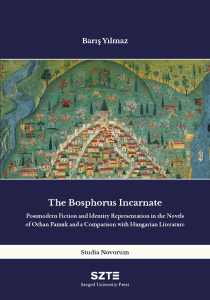
The Bosphorus Incarnate: Postmodern Fiction and Identity Representation in the Novelsof Orhan Pamuk and a Comparison with Hungarian Literature
Kulcsszavak:
historical novel, postmodern fiction, Turkish literature, intertextuality, metafiction, identity representation, world literature, east-west dichotomyTartalom
Often celebrated as the bridge between East and West, Orhan Pamuk's fiction represents a sophisticated synthesis of Turkish literary heritage and global postmodernism. In this monograph, Pamuk emerges as "The Bosphorus Incarnate," a writer who uses postmodern narratives to challenge official truths and explore Turkey's fragmented modern identity. By situating Pamuk's work alongside Hungarian authors László Darvasi and Viktor Horváth, the book highlights the universal power of postmodern narrative to reshape national history. This is an essential exploration of how one of the world's most influential authors reinvents tradition to question the boundaries between fiction, history, and the self.
Fejezetek
-
I. Introduction
-
II. Who Does Pamuk Write for?
-
III. Orhan Pamuk and His Fiction
-
IV. Postmodern Understanding of Reality and Fictionality
-
V. Cultural Identity and Narratives
-
VI. Postmodern Narratives and Historiographic Metafiction
-
VII. Postmodern Narrative Strategies in the Western and Eastern Canons
-
VIII. Conclusion
Letöltések
Közzétett
március 17, 2026
Copyright (c) 2026 Barış Yılmaz (Szerző)
Részletek a kiadványról
ISBN-13 (15)
978-963-688-103-0
Publication date (01)
2026